Возрождение Неоготики
Креативный

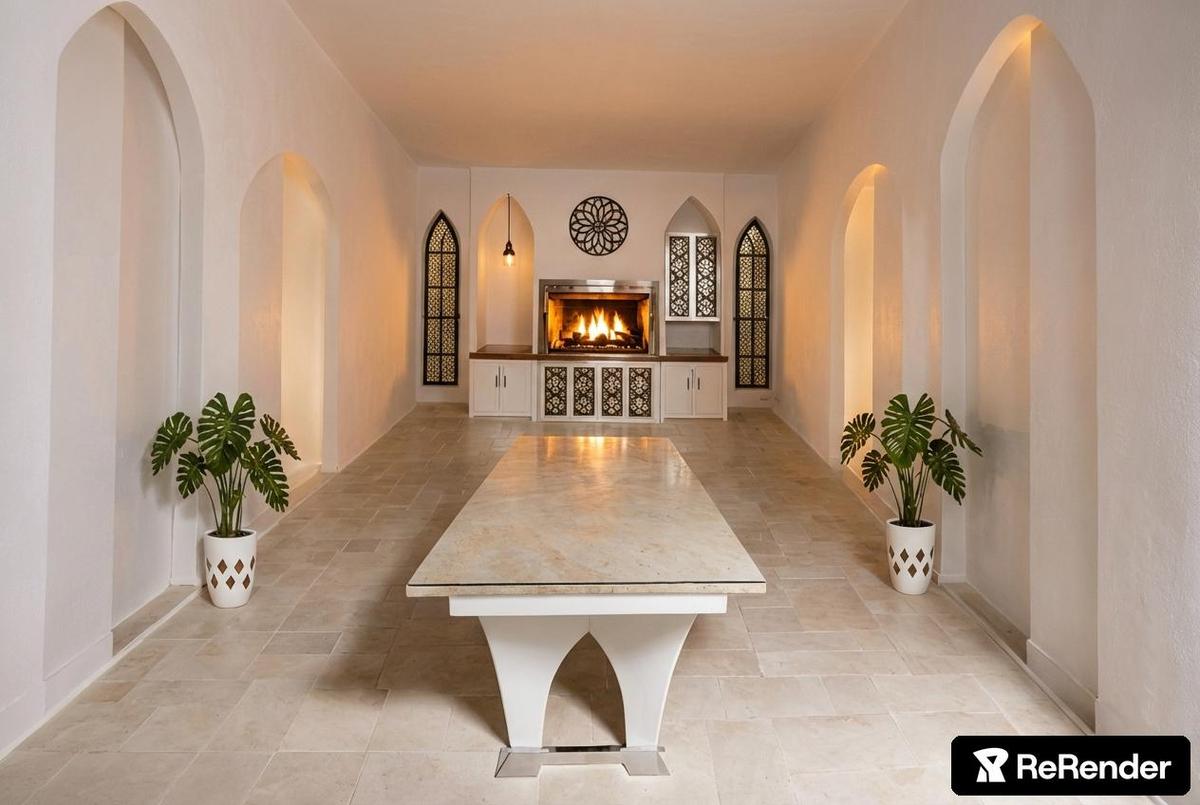

An incredibly lifelike, richly detailed, photorealistic interior photo of a grand dining hall set in an autumnal forest. The scene is illuminated by soft midday light filtering through tall, arched windows, creating a warm and inviting atmosphere with a touch of melancholic beauty. Captured with a wide-angle lens, emphasizing the soaring ceilings, intricate Gothic details, and the rich textures of wood and stone. This reimagined space transforms the original minimalist, vaguely Mediterranean feel into a sophisticated Neo-Gothic Revival dining hall, designed for a 'quincho' – a South American-style barbecue area – with a parrilla (grill) as its focal point. The stark white walls are replaced with a complex palette of deep forest greens and charcoal grays, accented with touches of burnished gold. The texture of the walls shifts from smooth plaster to a more refined finish, perhaps a subtle Venetian plaster with a hint of iridescence, or even panels of dark, rich wood. The simple tile flooring is upgraded to large, irregular slabs of dark slate, interspersed with thinner bands of polished limestone, evoking the ancient flagstones of a medieval cathedral. The arched alcoves along the side walls are deepened and enhanced with stained glass panels depicting scenes of the surrounding forest in autumn hues. These windows, along with the main Gothic-style windows flanking the parrilla, allow the dappled sunlight of the clear autumn day to stream in, casting colorful patterns across the floor and furniture. Above the main dining table, a striking pendant lamp, reminiscent of a Gothic candelabra, hangs suspended. It features wrought iron detailing and delicate, amber-toned glass shades, casting a warm, intimate glow. The central feature is a substantial, elongated dining table, its surface now a dark, polished walnut or a deep mahogany, its edges subtly carved with Gothic motifs. Instead of the original marble top, imagine a richly veined, dark wood that can withstand the use of a 'quincho', perhaps sealed with a matte, non-reflective finish. This is surrounded by a set of substantial, high-backed dining chairs, upholstered in a luxurious, deep emerald green velvet, their frames crafted from ebonized oak with intricate carved detailing. The parrilla at the far end is no longer a casual built-in but a commanding, architectural element. Its surround is fashioned from dark, hammered metal, perhaps bronze or blackened steel, with ornate Gothic tracery. The fire within the parrilla glows invitingly, casting flickering light onto the surrounding area. Flanking the parrilla, instead of simple cabinets, are tall, narrow bookcases or display cabinets made of dark wood, their glass fronts fitted with decorative metal grilles, displaying antique leather-bound books or decorative ceramic pieces with a dark, earthy glaze. The decorative wall feature above the parrilla is retained but perhaps is now rendered in a darker metal, with a more intricate, almost lace-like pattern. The overall composition of the space is balanced and harmonious, yet asymmetrical in its smaller details, lending a sense of organic growth and age. The long dining table acts as the anchor for the room, its placement creating a clear circulation path around it. The parrilla commands the focal point at the end of the hall, drawing the eye and serving as the functional heart of the space. The tall, vertical lines of the Gothic architecture – the windows, the arches, the chairs – draw the eye upwards, enhancing the sense of grandeur. The plants, while still present, are now more refined, perhaps a pair of ancient olive trees in large, dark terracotta pots, or elegant ferns in minimalist black planters. The atmosphere aims for a blend of sophisticated comfort and historical gravitas. It's a place where the warmth of the fire and the shared meal create intimacy, while the imposing architecture and the autumnal forest outside provide a sense of connection to nature and history. Imagine the scent of woodsmoke mingling with the crisp, cool air of autumn, the sound of crackling fire, and the murmur of conversation. The view from the windows is a painterly scene of a dense forest ablaze with the vibrant reds, oranges, and yellows of fall foliage, perhaps with a gentle mist rising in the distance. This Neo-Gothic Revival quincho is a sanctuary, a place for celebration and reflection, blending the rustic pleasure of a barbecue with the refined elegance of a bygone era.